
Last Updated: November 15, 2026
Quick Summary
Organic body lotion is built primarily from plant-derived ingredients like oils and butters, while synthetic moisturizers rely on lab-created ingredients such as petrolatum, silicones, or synthesized humectants. Neither category is automatically better; what matters is how a formula holds water in your skin and treats your barrier.
- Natural, clean, and non-toxic carry no legal definition for cosmetics, so treat labels as a starting point.
- Humectants attract water, emollients soften skin, and occlusives seal moisture in; a good formula uses all three.
- Plant oils go rancid over time, so a short shelf life and dark packaging signal a fresher product.
- Water-based lotions need a preservative system because water supports microbial growth.
- Introduce one new product at a time and give it a week before adding another.
Table of Contents
- What Organic Body Lotion and Synthetic Moisturizers Really Mean
- Organic vs. Synthetic Skincare Ingredients: How They Differ
- Natural Body Lotion for Dry Skin: What Actually Holds Moisture
- Body Oil vs. Lotion: Choosing the Right Texture for Your Skin
- Preservatives, Stability, and Sensitive Skin: The Trade-Offs
- A Nourishing Ritual for Every Skin Type
- Finding Your Match in the glō Luxury Oils Collection
- Frequently Asked Questions
What Organic Body Lotion and Synthetic Moisturizers Really Mean
The words on a body lotion label tell you less than you think. "Natural," "clean," and "organic" are not interchangeable, and none of them guarantee a formula that suits your skin.
Here's the uncomfortable truth most guides skip: a plant-derived ingredient can still irritate sensitive skin, and a lab-made one can be gentler than its botanical cousin.
Neither category is automatically better. The FDA's guidance on cosmetic labeling makes clear that terms like "natural" carry no legal definition for cosmetics, so the label is a starting point, not a verdict.
The limits of natural, organic, and clean labels
"Clean beauty" has no regulated meaning. Neither does "non-toxic" on a moisturizer bottle. A brand can print either word without meeting any standard.
Organic certification is different. In the United States, the USDA National Organic Program sets rules for what "certified organic" means on agricultural ingredients, so that seal is one of the few you can actually verify.
If you want to dig into specific ingredients worth questioning, our guide to 5 Ingredients To Avoid In Food Skincare Products goes deeper than any label can.
Organic vs. Synthetic Skincare Ingredients: How They Differ
The real difference between organic and synthetic skincare ingredients comes down to origin and function, not safety. Plant oils and butters soften skin; lab-made humectants pull water in; occlusives seal it. A good formula uses all three, whatever their source. The useful question is not "natural or synthetic?" but "what is this ingredient doing in the formula, and what does it trade off?"
Humectants, emollients, and occlusives explained
Think of moisturizing as a three-part job, and each part needs a different kind of ingredient:
- Humectants attract water into the skin. Glycerin is the classic example, and it can be plant-derived or synthetic; the molecule is the same either way. Hyaluronic acid and panthenol work the same way.
- Emollients fill the gaps between skin cells so skin feels soft. Plant oils like camelina, jojoba, and sunflower do this well, and so do lab-made esters and silicones such as dimethicone.
- Occlusives form a seal that slows water loss. Petrolatum is the best-known occlusive; plant butters, waxes, and heavier oils play the same role.
A common mistake is buying a humectant-heavy lotion for very dry skin. It pulls in water but has nothing to hold it there, so you're back to tight, flaky skin by afternoon. Pair humectants with an emollient or occlusive and the moisture stays put.
An ingredient-by-ingredient comparison
Here is how the ingredients you are most likely to see on a label actually compare, including where each one falls short:
- Plant oils (camelina, jojoba, sunflower, olive). Emollient and partly occlusive; rich in fatty acids and vitamin E. Trade-off: oxidation. Oils go rancid over time, so a short shelf life and dark packaging are signs of a fresher product, not a weaker one.
- Shea and cocoa butter. Heavy occlusives that suit very dry patches and rough elbows. Trade-off: they can feel waxy on oily skin and are comedogenic for some people.
- Petrolatum. The most effective occlusive commonly used, and well tolerated by most sensitive skin. Trade-off: it is petroleum-derived, which is a sourcing concern for some buyers rather than a safety one.
- Glycerin. A reliable humectant that is usually synthesized today. Trade-off: in very low humidity it can pull water from the deeper skin rather than the air, so it works best under an occlusive.
- Ceramides. Lab-made lipids that mirror the skin's own barrier components. Trade-off: they are synthetic, and they are one of the few ingredients with a specific barrier role rather than a general softening one.
- Silicones (dimethicone). Emollients that give a smooth, non-greasy slip and reduce water loss. Trade-off: some people dislike the film, and they are not biodegradable in the way plant oils are.
- Fragrance. Whether essential oil or synthetic, it is the most common cause of cosmetic contact allergy. Trade-off: scent is part of the ritual for many people, so the honest answer is to patch test rather than to assume "natural fragrance" is safer.
Why origin and function are separate questions
A plant-derived ingredient can still irritate sensitive skin, and a lab-made one can be gentler than its botanical cousin. What matters is how a formula holds water in your skin and how it treats your barrier.
If you want to dig into specific ingredients worth questioning, our guide to 5 Ingredients To Avoid In Food Skincare Products goes deeper than any label can.
Natural Body Lotion for Dry Skin: What Actually Holds Moisture
For dry skin, the ingredient that seals in water matters more than the one that adds it.
Camelina oil, cold-pressed and rich in vitamin E and omega-3s, is one example of a plant oil that softens dry skin. Shea and cocoa butter are heavier occlusives for very dry patches.
Watch out: a "natural" lotion built mostly on water and a light oil can evaporate before it does much for arid-climate dryness. Thicker textures and oil-based formulas tend to hold moisture longer when the air is dry.
Body Oil vs. Lotion: Choosing the Right Texture for Your Skin
Body oil and lotion do different jobs, and your skin type decides which you reach for. Lotions are water-based and absorb fast. Oils are lipid-rich and can help seal in moisture.
The trade-off most reviews miss: oils can feel heavy if you apply too much, but a few drops pressed into damp skin absorb cleanly without a greasy residue.
If you prefer a balm-like texture over a liquid oil, the Garden Body Balm offers a middle ground between a lotion and a body oil.
| Feature | Body Oil | Body Lotion |
|---|---|---|
| Base | Plant oils and butters | Water plus emulsifiers |
| Best for | Dry, mature, sensitive skin | Normal to oily skin |
| Feel | Rich, absorbs into damp skin | Light, spreads quickly |
| Reapply in dry climates | Less often | More often |
Preservatives, Stability, and Sensitive Skin: The Trade-Offs
Preservatives keep water-based products from growing bacteria, and that matters for anyone with sensitive or eczema-prone skin. The catch is that some preservatives, along with synthetic fragrance, are common triggers for irritation and allergic reaction. Understanding why preservatives exist makes the trade-off easier to weigh instead of fear.
Why water-based lotions need preservation
Any formula that contains water is a potential home for microbes. Water activity, the amount of free water available to microorganisms, is what determines whether bacteria, yeast, and mold can multiply. A lotion with a high water content and no preservative system can become contaminated within days of opening, and contamination is not always visible: a product can look and smell normal while carrying organisms that cause irritation or infection, especially on broken or eczema-prone skin.
But for a water-based lotion, some preservation system is essentially non-negotiable.
What stability means for safe use
Stability is the other half of the story. A formula has to hold together over time: oil and water must stay emulsified, the pH must stay in range, and the preservative must remain effective for the life of the product. That is why products carry a period-after-opening symbol and why storing a lotion in a hot bathroom or leaving it open shortens its safe life. A separated, discolored, or oddly scented lotion is a sign the formula has moved past its stable window, and it should be replaced rather than shaken and used.
Where water-free formulas fit
This is where water-free formulas earn their place. An oil-based product without water does not support microbial growth the same way, so it does not need the same preservative system, which lowers one irritation risk. That does not make every oil gentle, though. Essential oils can still bother reactive skin. Always patch test on your inner arm first.
A practical note for sensitive skin
If your skin reacts easily, the useful move is to introduce one new product at a time and give it a week before adding another, so you can tell what caused a reaction. Patch testing on the inner arm for a few days is a simple habit that costs nothing and tells you more than any label claim.
For reactive or sensitive skin, the Eczema Ease Oil is formulated to ease dry, itchy, red patches and heal the damaged skin barrier.
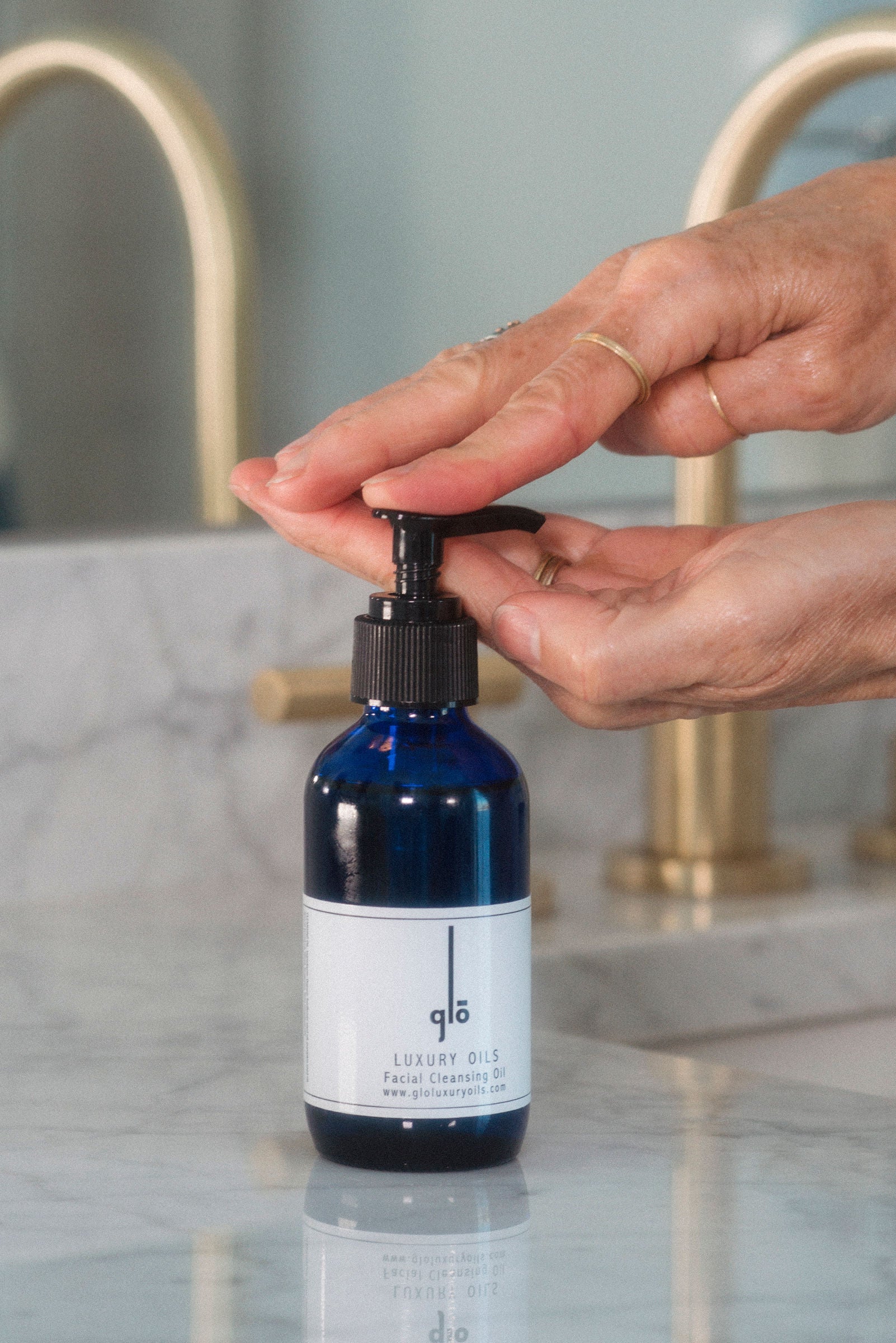
A Nourishing Ritual for Every Skin Type
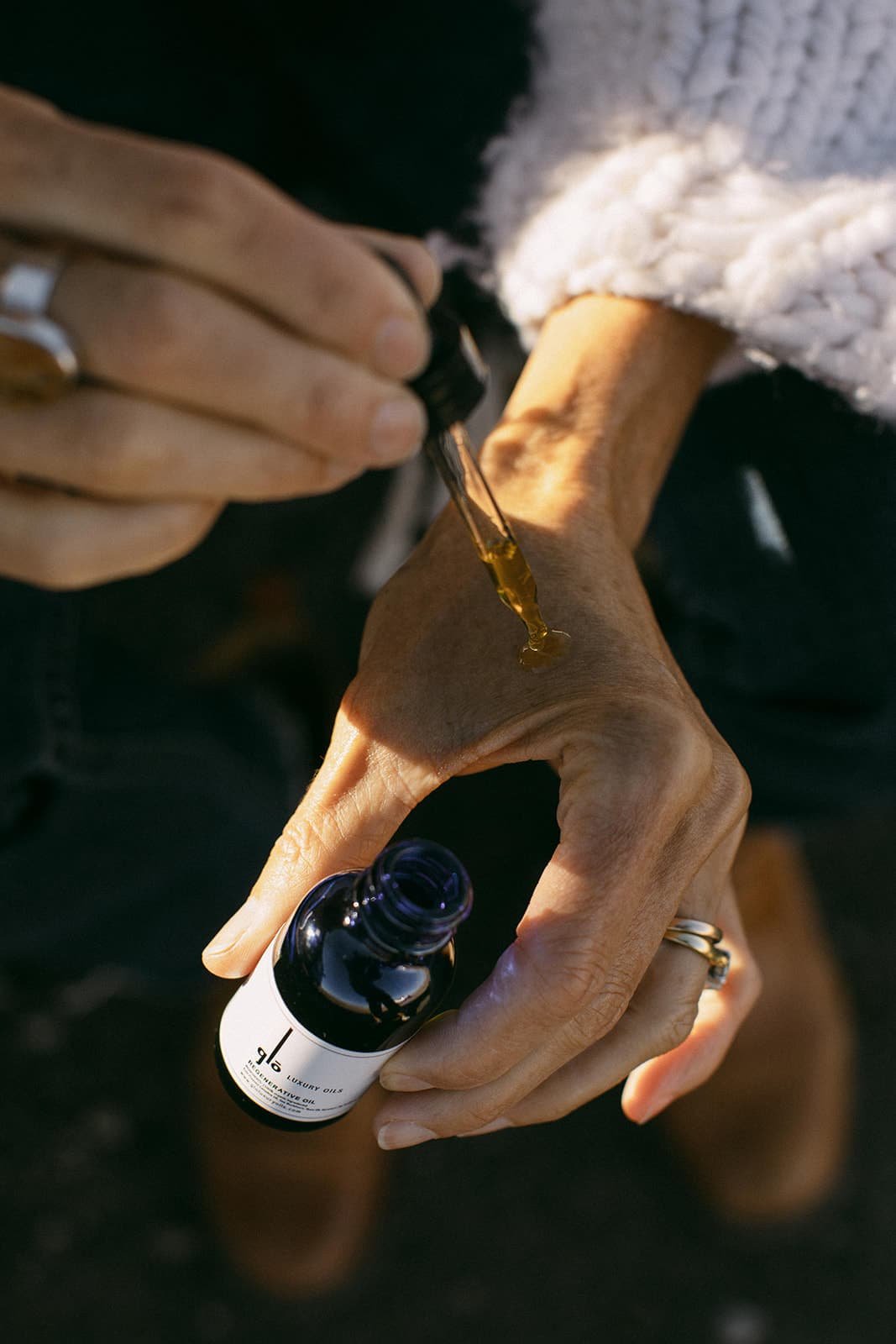
Caring for your skin can be a ritual of nourishment and self-love. The routine you look forward to is the one you're most likely to keep.
Try this simple sequence:
- Pat skin damp after a shower, don't rub dry.
- Warm a few drops of oil between your palms.
- Press, don't scrub, into arms, legs, and any dry patches.
- Give it a minute to absorb before dressing.
That pause, the warm oil, the slow press, is the self-love part. If you're building a gentle routine for sensitive skin, our guide to Sustainable Beauty Practices for Sensitive Skin extends these habits.
Finding Your Match in the glō Luxury Oils Collection
Choosing comes down to your skin and your texture preference. Our oils are made with 100% natural ingredients, sourced directly from growers and produced in small batches.
Here's how our body oils compare:
| Product | Texture | Best For |
|---|---|---|
| Body Love Oil | Light, rose geranium scent | Calming dry, irritated skin |
| Relaxing Lavender Body Oil | Gentle, floral | Sensitive skin, rashes |
| Moroccan Body Oil | Light, fast-absorbing | All skin types, glow |
| Protect Oil SPF 25 | Mild, nearly unscented | Dry skin plus sun protection |
| Eczema Ease Oil | Thick, sealing | Itchy, reactive patches |
You can browse the full Body Oils collection to match a formula to your skin.
The real question isn't whether natural beats synthetic. It's whether a formula nourishes your skin and fits your ritual. At glō Luxury Oils, we craft 100% natural body oils in small batches, source ingredients directly from fair-trade and organic growers, and ship in recyclable packaging with compostable materials.
Frequently Asked Questions
Are organic body lotions better for dry skin?
Organic body lotions and oils can be excellent for dry skin because plant oils and butters act as emollients that soften rough texture while occlusive ingredients help slow water loss. Look for a formula built around nourishing plant oils rather than water and alcohol. For very dry skin, a body oil applied to damp skin after a shower is one option to try.
How is organic body lotion different from conventional moisturizer?
The main difference is the ingredient list. Organic body lotion relies on plant-derived ingredients like shea butter, cocoa butter, and botanical extracts, while conventional moisturizers often pair water with petroleum-derived ingredients such as petrolatum and synthetic preservatives. Both can hydrate, but organic formulas tend to focus on nourishing the skin barrier with plant oils, while synthetic formulas may prioritize texture and long shelf stability. Patch test any new product first.
What should I look for in a body lotion for sensitive skin?
Start with a short ingredient list built on gentle plant oils and butters, and avoid added fragrance if your skin reacts easily. Look for terms like unscented, essential-oil-free, or formulated for sensitive skin, and always patch test on your inner arm for a few days. If your skin is eczema-prone, you may wish to discuss your routine with a healthcare provider.
Is body oil or lotion better for very dry skin?
Many people with very dry skin find body oil a comfortable option. The trick is to apply it to damp skin straight out of the shower so it traps existing moisture. Lotions are lighter and absorb quickly, which suits daytime wear or normal skin. Many people layer both: a lotion first, then a few drops of oil on the driest areas.
