
Table of Contents
- What Sustainable Beauty Means for Reactive Skin
- How to Read Labels and Spot Greenwashing
- Best Organic Skincare for Sensitive Skin: What to Look For
- Benefits of Organic Facial Oils for Sensitive Skin
- Building a Minimalist Skincare Routine for Sensitive Skin
- Sustainable Packaging and Disposal: Closing the Loop
- Patch Testing Eco-Friendly Formulations Safely
- The Cost of Sustainable Beauty: Is It Worth It?
- Frequently Asked Questions
Last Updated: September 30, 2026
What Sustainable Beauty Means for Reactive Skin
Sustainable beauty means choosing skincare that limits harm to your skin, your health, and the environment at once. For reactive skin, those goals overlap more than most people expect.
How to Read Labels and Spot Greenwashing
Greenwashing is when a brand uses words like "natural," "clean," or "botanical" to sound safer without changing anything real. For sensitive skin, that gap is not cosmetic: a product can say "plant-based" on the front and still contain synthetic fragrance or a high-load essential oil blend that sets your face on fire.
The Sensitive-Skin Trap in "Natural" Marketing
This is the angle most green-beauty guides skip: for reactive skin, the most common irritants are often botanical, not synthetic.
- Essential oils. Lavender, citrus, peppermint, eucalyptus, and tea tree are natural and also among the most frequent contact irritants. A "100% natural" serum can be loaded with them.
- Botanical extracts. Witch hazel, citrus extracts, and many floral waters sound gentle but can sting compromised skin.
- "Fragrance" and "parfum." Under U.S. labeling rules, a single word can stand in for a proprietary blend of dozens of compounds, including known sensitizers. You cannot patch test what you cannot see.
- "Unscented" vs. "fragrance-free." Unscented products sometimes contain masking fragrance. Fragrance-free is the safer claim, but still verify on the ingredient list.
How to Read the Back of the Bottle
Skip the front. The back is where the truth lives.
- Look for a full ingredient list. If a brand hides behind "fragrance" or "parfum," you cannot know what is inside.
- Check for third-party certifications. "Certified organic" under the USDA National Organic Program means a third party verified the agricultural ingredients. "Made with organic ingredients" means almost nothing.
- Watch for vague claims. "Chemical-free" is impossible. Water is a chemical. "Non-toxic" has no regulatory definition.
- Check the sourcing story. Fair trade and ethical sourcing claims should name specific farms or cooperatives, not be decorative.
- Look for recognized seals. USDA Organic, Leaping Bunny (cruelty-free), and NSF or EWG Verified are third-party programs with published standards. A brand's own leaf logo is not a certification.
A Quick Label Audit
Before you buy, run this three-question check:
- Is there a full INCI ingredient list? If not, walk away.
- Does "fragrance" or "parfum" appear? If yes, assume it is a risk for reactive skin.
- Is there a third-party certification, or just a marketing word? Certifications have standards. Marketing words do not.
That is the whole game. Greenwashing survives on vague language. Specifics are what protect your barrier.
Best Organic Skincare for Sensitive Skin: What to Look For
The best organic skincare for sensitive skin uses short ingredient lists, fragrance-free formulas, and plant oils that calm the skin barrier instead of stripping it. Fewer ingredients means fewer chances for a reaction.
Ingredients That Soothe and Protect
Look for plant-based ingredients with a track record for calming skin:
- Jojoba oil - closely matches your skin's own oils
- Rosehip seed oil - rich in fatty acids that support repair
- Squalane - lightweight and non-comedogenic
- Chamomile and calendula - traditionally used to soothe redness
- Oat and aloe - hydrating and calming for reactive skin
Ingredients to Avoid in Eco-Friendly Products
Even "green" products can hide irritants. Watch for these:
- Synthetic fragrance - the top trigger for sensitive skin
- Essential oils in high amounts - natural, but still can irritate
- Alcohol (denatured) - dries out and stings
- Harsh preservatives - some cause reactions in reactive skin
- Microplastics - bad for your skin and the ocean
Fragrance-free is not the same as unscented. Unscented products sometimes contain masking fragrance. Read carefully.
Benefits of Organic Facial Oils for Sensitive Skin
Organic facial oils give sensitive skin moisture without the water, fillers, and preservatives many creams rely on, that simpler makeup is why they suit reactive skin.
Here is what makes them work:
- They support the skin barrier. Plant oils rich in fatty acids help seal in moisture.
- They are often preservative-free. No water means no need for strong preservatives.
- They absorb without a greasy feel. Light oils like jojoba and squalane sink in fast.
- They soften the look of dryness and fine lines. Consistent use helps skin look calmer and more even.
Building a Minimalist Skincare Routine for Sensitive Skin
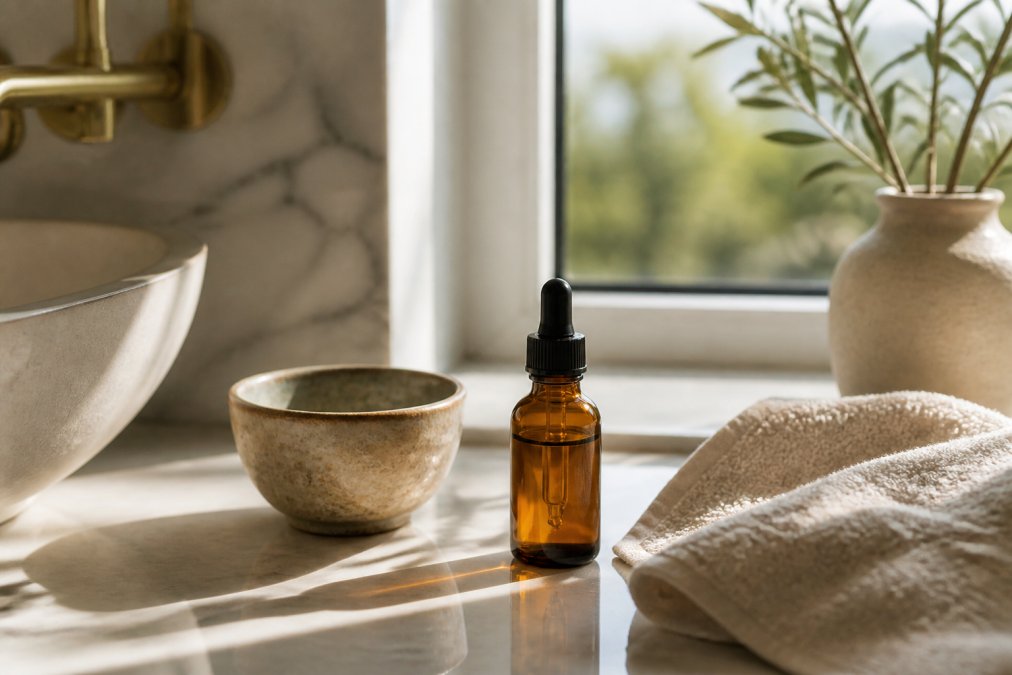
A minimalist skincare routine for sensitive skin uses three steps and a handful of products, fewer chances for irritation, and less waste.
A Simple Three-Step Routine
Step 1: Cleanse gently. Use a mild, fragrance-free cleanser. Rinse with lukewarm water, never hot. Hot water strips the barrier.
Sustainable Packaging and Disposal: Closing the Loop
Sustainable packaging means the container can be recycled, refilled, or composted instead of landfilled. But the real win comes from what you do with the empty, where most guides stop short.
Why Beauty Packaging Is So Hard to Recycle
Most municipal recycling programs sort by material and shape. Beauty packaging breaks both rules:
- Pumps and droppers combine plastic, metal springs, and sometimes silicone, all fused together.
- Airless bottles often have an inner bag and an outer shell made of different plastics.
- Tubes are usually multi-layer plastic or plastic-lined aluminum, which most facilities cannot separate.
- Small items, caps, droppers, sample jars, fall through sorting screens and get landfilled even when the material is technically recyclable.
How to Break Down Empties Before Recycling
Do this before anything goes in the bin:
- Scrape out the last of the product. Use a small spatula or the dropper itself. Leftover oil or cream can contaminate a whole recycling batch.
- Rinse with cool water. Hot water wastes energy and is not needed. A quick swish is enough.
- Separate every component. Pull the pump off the bottle. Remove the dropper from the cap. Take the inner bag out of an airless container.
- Sort by material. Glass and aluminum go in curbside recycling in most programs. Rigid plastic (look for a resin code) usually does too. Pumps, droppers, and soft tubes usually do not.
- Check your local rules. Curbside programs vary widely by municipality. When in doubt, look up your city's accepted materials list before you set the bin out.
Where the Hard-to-Recycle Parts Actually Go
For pumps, droppers, and tubes that curbside will not take, you have three real options:
- Store drop-off programs. Some retailers and brands run in-store collection for beauty empties. These programs accept mixed-material packaging that curbside cannot.
- Mail-back programs. A few brands include a prepaid label so you can send empties back for processing. Check the brand's site before you buy.
- TerraCycle-style collection boxes. These accept complex beauty waste for a fee, either through a brand-sponsored box or a paid drop-off point.
Refills Cut the Problem at the Source
A refillable bottle keeps the pump, cap, and outer shell in use for years; you only replace the inner cartridge or pouch, eliminating the hardest-to-recycle components from your waste stream almost entirely.
Patch Testing Eco-Friendly Formulations Safely
Patch testing means applying a small amount of a new product to a small area of skin and waiting to see how it reacts, the single best way to avoid a full-face flare-up.
Do this before any new product touches your face:
- Clean a small spot. Use the inside of your forearm or behind your ear.
- Apply a small amount. A pea-sized drop is plenty.
- Wait 24 hours. Do not wash it off early.
- Check for a reaction. Look for redness, itching, or swelling.
- Repeat if clear. Test again for a second day before using it on your face.
The Cost of Sustainable Beauty: Is It Worth It?
Sustainable beauty usually costs more upfront than drugstore options. The question is whether the value holds up over time.
Here is a simple way to compare:
| Factor | Conventional Skincare | Sustainable Skincare |
|---|---|---|
| Upfront cost | Lower | Higher |
| Ingredient list | Longer, more synthetics | Shorter, plant-based |
| Sourcing transparency | Often unclear | Traceable to farms |
| Packaging | Mostly single-use plastic | Recyclable or refillable |
| Reaction risk for sensitive skin | Higher | Lower |
Frequently Asked Questions
How can I make my skincare routine more sustainable without irritating sensitive skin?
Start by simplifying. Choose products with short ingredient lists, no synthetic fragrance, and recyclable or refillable packaging. Look for certifications like USDA Organic or Leaping Bunny. Patch test every new product on your inner arm for 48 hours. Avoid harsh exfoliants and drying alcohols. A minimalist routine of a gentle cleanser, a soothing organic facial oil, and a mineral sunscreen can be both sustainable and calming for reactive skin.
What ingredients should sensitive skin avoid in eco-friendly products?
Even natural products can trigger reactions. Watch for essential oils like citrus, peppermint, and eucalyptus, which can cause redness and inflammation. Also avoid synthetic fragrances, parabens, and sulfates. Some plant extracts, such as witch hazel, can be drying. Check labels for 'fragrance-free' rather than 'unscented,' as the latter may still contain masking scents. Stick to hypoallergenic, non-comedogenic formulas with soothing ingredients like chamomile or oat.
Are organic facial oils better for sensitive skin than synthetic alternatives?
Organic facial oils often contain fewer synthetic chemicals and preservatives, reducing irritation risk. They can mimic skin's natural lipids, helping to repair the skin barrier and lock in moisture. Look for oils high in linoleic acid, such as rosehip or evening primrose, which are lightweight and non-comedogenic. However, not all natural oils suit every sensitive skin type. Patch test first, and choose cold-pressed, unrefined oils to retain beneficial nutrients.
How do I identify truly sustainable beauty brands?
Look for third-party certifications like B Corp, USDA Organic, or Fair Trade. Check the brand's website for transparency about sourcing and manufacturing. Avoid vague terms like 'green' or 'eco-friendly' without proof. See if they offer refillable or recyclable packaging and compostable shipping materials. Brands that publish ingredient origins and fair labor practices are more trustworthy. When in doubt, contact customer service and ask specific questions about their supply chain.
If you have reactive skin, the hardest part is finding a formula you can trust. glō Luxury Oils makes that easier with 100% organic facial oils, small-batch production, and ingredients sourced directly from fair-trade and organic-certified farms. Every bottle is designed to nourish and protect sensitive skin, and every order ships in recyclable packaging with compostable materials. Get started with glō Luxury Oils and build a routine your skin can actually tolerate.