
Table of Contents
- Do Organic Face Oils Actually Cause Breakouts?
- Understanding Comedogenic Ingredients and the Comedogenic Scale for Facial Oils
- The Difference Between Oily Skin, Acne-Prone Skin, and Pore-Clogging Products
- Non-Comedogenic Organic Face Oils: What to Look For
- How to Apply Face Oil for Acne-Prone Skin Without Triggering Breakouts
- Purging vs. Breaking Out: Why Your Skin Might React to New Oils
- Common Myths About Oils and Acne
- Conclusion
- Frequently Asked Questions
Last Updated: September 28, 2026
Do Organic Face Oils Actually Cause Breakouts?
The short answer to do organic face oils cause breakouts is that they don't inherently, but the wrong oil for your skin type absolutely can.
Most guides treat all oils as interchangeable and all breakouts as proof that oils don't work. In reality, breakouts depend on three factors: the specific oil's comedogenic rating, your individual skin's lipid barrier composition, and how you're applying the product.
Understanding Comedogenic Ingredients and the Comedogenic Scale for Facial Oils
The comedogenic scale ranks ingredients from 0 (non-comedogenic) to 5 (highly comedogenic). Most organic face oils fall in the middle, which is why blanket statements about oils and acne miss the mark.
Linoleic acid supports the skin barrier with a lower comedogenic rating, while oleic acid is heavier and more occlusive, problematic for acne-prone skin. Oil composition matters more than "organic" or "natural" labels.
The Scientific Limitations of the Comedogenic Scale
The comedogenic scale has significant methodological flaws: it was developed using rabbit ears, not human skin, so individual responses vary dramatically based on microbiome, pH balance, and barrier health. A product rated 2 might work for one person and cause whiteheads in another.
There is no standardized testing protocol across the industry. Different labs rate the same oil differently depending on application method, concentration, and skin condition. Some use in vitro testing, others in vivo, with misaligned results. You cannot rely on comedogenic ratings alone to predict performance on your skin.
The scale doesn't account for synergistic effects. An oil rated 2 behaves differently when layered with serums versus applied alone. Your full routine context matters as much as the individual rating.
Fatty Acid Profiles: The Real Predictor
Look at fatty acid composition instead of relying solely on comedogenic ratings. Linoleic acid oils (safflower, sunflower, hemp seed) are less occlusive and support barrier repair. Oleic acid oils (argan, macadamia, avocado) are richer but problematic for acne-prone skin. Balanced oils (jojoba, rosehip) work across skin types.
Bioactive compounds matter too. Rosehip contains vitamin A and polyphenols that reduce inflammation. Tamanu oil has antimicrobial properties that suppress Cutibacterium acnes. These compounds don't appear on comedogenic scales but meaningfully improve acne-prone skin outcomes.
How to Use the Comedogenic Scale Responsibly
Treat comedogenic ratings as a starting point, not a guarantee. Oils rated 0-2 are reasonable for acne-prone skin with patch testing. Avoid ratings of 3+ unless you have very dry skin. Track your skin's response over 4-6 weeks; if congestion worsens, the oil is too comedogenic for your chemistry.
The Difference Between Oily Skin, Acne-Prone Skin, and Pore-Clogging Products
Oily skin produces excess sebum regardless of topical products. Acne-prone skin has a compromised barrier, increased inflammation, and bacterial colonization. A pore-clogging product is a high-comedogenic substance that blocks follicles. These are distinct problems.
You can have oily skin without acne, dry skin with acne, or balanced skin that reacts to one product. A lightweight, non-comedogenic oil can regulate sebum by signaling adequate lipid barrier moisture, often improving oily skin.
Acne-prone skin needs occlusive support without pore blockage. Natural oils contain complex fatty acid profiles and anti-inflammatory plant compounds. Synthetic alternatives offer consistency but lack microbiome-supportive compounds.
Non-Comedogenic Organic Face Oils: What to Look For
When selecting a non-comedogenic organic face oil, focus on fatty acid profile, anti-inflammatory compounds, and viscosity relative to your skin type.
Lower-comedogenic oils include jojoba (mimics natural sebum), rosehip (linoleic acid and vitamin A), and squalane (lightweight, plant-derived). All rate 1-2 on the comedogenic scale.
Look for products listing specific oils, not vague terms like "botanical blend." You need to know exactly what you're applying. glō Luxury Oils prioritizes transparency: every ingredient is listed and sourced from certified organic or fair-trade farms.
Viscosity matters. Heavier oils like argan suit mature or very dry skin but can be problematic for acne-prone skin. Lighter oils disperse easily and are less likely to trap bacteria. Start with lighter options if managing breakouts.
How to Apply Face Oil for Acne-Prone Skin Without Triggering Breakouts
Application technique determines whether an oil supports or overwhelms your skin. Common mistakes: applying to completely dry skin or using too much product. The order and ratio of water-based to oil-based products directly affects congestion risk.
The Oil-to-Water Ratio Problem
Water-based and oil-based products don't mix. Incorrect layering creates an occlusive seal that traps moisture, bacteria, and dead skin cells, ideal for breakouts. Proper sequencing prevents this.
The correct layering order:
- Cleanser (water-based)
- Toner or essence (water-based, hydrating)
- Serums with active ingredients like niacinamide or hyaluronic acid (water-based)
- Lightweight moisturizer, if using one (water-based or hybrid)
- Face oil (oil-based), applied last
Apply all water-based products first and allow them to absorb (1-2 minutes) before introducing oil. Oil over damp skin traps moisture underneath; oil over dry skin sits on the surface and clogs pores. The sweet spot is after absorption but while skin feels slightly plump from hydration.
The ratio matters. Multiple hydrating serums require fewer oil drops (1-2 instead of 3) to avoid over-occlusion. Minimal routines can use 3-4 drops. More water-based hydration means less oil needed.
Proper Application Technique
Start with damp skin with a light hydrating layer present. Use 2-3 drops maximum, warm between palms for 5-10 seconds, then press gently into skin using upward motions. Pressing, not rubbing, prevents friction-triggered inflammation.
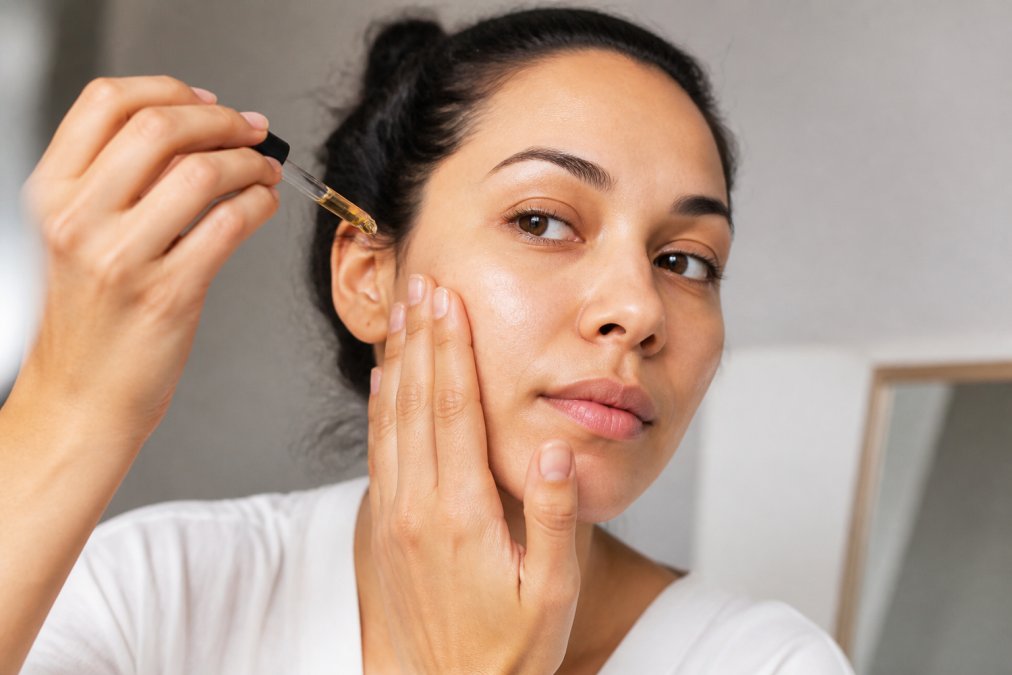
Apply oil where needed most. For acne-prone skin, concentrate on cheeks and forehead, avoid the T-zone if congestion-prone, skip the chin if breakouts cluster there. This targeted approach reduces over-occlusion risk.
Timing and Frequency Adjustments
Apply oil as the final step after water-based products absorb. With retinoids or acids, let them dry (3-5 minutes) before oil to prevent trapping actives. Many find retinoid + oil causes excessive occlusion; alternating nights often works better for acne-prone skin.
For acne-prone skin, consider using oil only at night or every other night initially. This gives your skin time to adjust without the added occlusion of makeup or sunscreen layered on top. Sunscreen is water-based but sits on top of oil, creating another occlusive layer, a common trigger for daytime breakouts. Once your skin adapts, typically within 2-3 weeks, you can experiment with daytime application if desired, but apply sunscreen first, allow it to set, then apply oil as the very last step (or skip the oil on days you're wearing makeup and sunscreen).
Signs Your Application Needs Adjustment
If you develop congestion or whiteheads within 3-5 days of starting an oil, the issue is usually one of these: (1) you're using too much product, (2) you're applying it to completely dry skin, (3) you're layering it over too many water-based products without proper absorption time, or (4) the oil itself is too comedogenic for your skin. Start by reducing the amount to 1-2 drops and ensuring proper absorption of water-based products before application. If congestion persists after 2 weeks, switch to a lower-comedogenic oil rather than abandoning oils entirely.
Purging vs. Breaking Out: Why Your Skin Might React to New Oils
This distinction changes everything. Purging is a temporary adjustment period where your skin sheds dead cells faster due to increased cell turnover. Breaking out is a genuine adverse reaction, congestion, inflammation, or irritation caused by the product itself.
Purging typically appears as small whiteheads or congestion in areas where you already experience breakouts. It usually resolves within 2-6 weeks as your skin adjusts. Breaking out, by contrast, appears suddenly in new areas, causes significant inflammation, or worsens over time rather than improving.
The challenge: organic face oils don't typically cause purging because they don't accelerate cell turnover the way active ingredients do.
Common Myths About Oils and Acne
Myth 1: All oils cause breakouts. Reality: Only oils with high comedogenic ratings or those applied incorrectly cause congestion. Non-comedogenic organic face oils can actually improve acne-prone skin by supporting the lipid barrier and reducing inflammation.
Conclusion
The evidence is clear: the answer to do organic face oils cause breakouts is no, they don't cause breakouts. The wrong oil for your skin type, applied incorrectly, causes breakouts. The difference is actionable.
Frequently Asked Questions
Why do some organic face oils cause breakouts while others don't?
Oils vary in their fatty acid composition. Some contain high levels of oleic acid, which can penetrate the skin barrier and trigger congestion in acne-prone individuals. Others are rich in linoleic acid, which supports the skin barrier and resists pore-clogging. The comedogenic scale rates oils from 0 (non-comedogenic) to 5 (highly comedogenic) based on these properties. Even organic oils can be problematic if they don't match your skin type. Patch testing any new oil on a small area for 1-2 weeks helps identify whether it will cause breakouts before applying it to your entire face.
How do I know if a face oil is truly non-comedogenic?
Check the product label for the comedogenic rating or look up individual oils in the ingredient list on the comedogenic scale. Non-comedogenic oils typically score 0-2 on the scale and include jojoba, squalane (plant-derived), rosehip, and argan oils. Be cautious of marketing language alone, brands may claim 'non-comedogenic' without backing it up. Organic certification ensures purity but does not guarantee an oil won't clog pores, so verify both the organic status and the comedogenic profile.
Is the difference between purging and breaking out real, or just marketing?
The difference is real and rooted in skin biology. Purging occurs when active ingredients (like retinoids or acids) accelerate skin turnover, bringing existing congestion to the surface faster. Breakouts from pore-clogging happen when occlusive products prevent sebum from flowing freely. Purging is temporary (2-6 weeks), affects areas prone to congestion, and improves with continued use. True breakouts from a clogging product worsen over time and appear in new areas. If you're unsure, stop using the oil for 1-2 weeks; if breakouts clear, the oil was clogging your pores, not purging.
Can I use organic face oils if I have sensitive skin or rosacea?
Yes, but with caution. Oils can soothe the skin barrier and reduce inflammation associated with rosacea or sensitivity when chosen carefully. Look for oils with anti-inflammatory fatty acids and avoid essential oils, which can trigger flare-ups. Patch test on the inner arm or behind the ear first, then apply a single drop to a small facial area for 2-3 days before expanding use. Start with just 2-3 drops and apply to damp skin to minimize irritation. If you have active rosacea or eczema, consult a dermatologist before introducing oils, as individual sensitivities vary widely.