
Table of Contents
- Why Small Batch Organic Skincare Delivers Superior Potency
- Organic Skincare for Sensitive Skin: How Small-Batch Formulas Reduce Irritation
- Fresh Ingredients and Nutrient Integrity in Artisanal Production
- Benefits of Fair Trade Skincare Ingredients and Transparency
- Sustainability and Environmental Impact of Small-Batch Manufacturing
- How to Identify Authentic Organic Skincare and Verify Small-Batch Claims
- Small Batch vs. Mass-Produced Skincare: Cost-Benefit Analysis
- Conclusion
- Frequently Asked Questions
Last Updated: September 27, 2026
Why Small Batch Organic Skincare Delivers Superior Potency
Small batch organic skincare operates on a fundamental principle: freshness equals efficacy. When ingredients are sourced directly from organic farms and formulated in smaller quantities, the potency of active compounds remains intact from production to application. This is where small batch organic skincare distinguishes itself from mass-produced alternatives that sit in warehouses for months before reaching consumers.
The difference lies in oxidation and ingredient degradation. Essential oils, botanical extracts, and fatty acids lose their bioavailability over time when exposed to light, heat, and oxygen during extended storage and distribution cycles. Small-batch producers minimize this window, moving from harvest to formulation to your hands in weeks rather than months. At glō Luxury Oils, we directly source ingredients from small, fair-trade, and organic-certified farms worldwide, ensuring unparalleled freshness and efficacy in every small-batch formula.
This approach matters most for people with sensitive skin conditions like rosacea or eczema. When active ingredients remain at their highest concentration, you need less product to see results, reducing the risk of irritation from overuse. The nutrient-dense composition of fresh, artisanal formulations means your skin receives maximum benefit from each application.
Organic Skincare for Sensitive Skin: How Small-Batch Formulas Reduce Irritation
Organic skincare for sensitive skin works because small-batch production eliminates the preservative load required for mass-market shelf stability. Commercial skincare relies on synthetic preservatives, emulsifiers, and stabilizers to prevent bacterial growth and ingredient separation over the 18-24 months they sit on retail shelves. Each additive introduces a potential irritant for sensitive skin.
Small-batch formulations operate under a different constraint: they're used within weeks of production, not years. This means fewer chemical additives are necessary. Many artisanal producers use only natural preservatives like vitamin E, rosemary extract, or essential oils, compounds your skin recognizes and tolerates better than synthetic alternatives.
For people managing rosacea, hormonal breakouts, or eczema-prone skin, this reduction in synthetic additives translates directly to fewer flare-ups. The skin barrier benefits from exposure to nutrient-dense oils and botanicals rather than chemical stabilizers. When you switch to small batch organic skincare, inflammation from repeated irritant exposure may decrease.
Transparency matters here too. Artisanal producers typically list every ingredient and its source. You know exactly what's going into your skincare, making it easier to identify triggers if a reaction does occur.
Fresh Ingredients and Nutrient Integrity in Artisanal Production
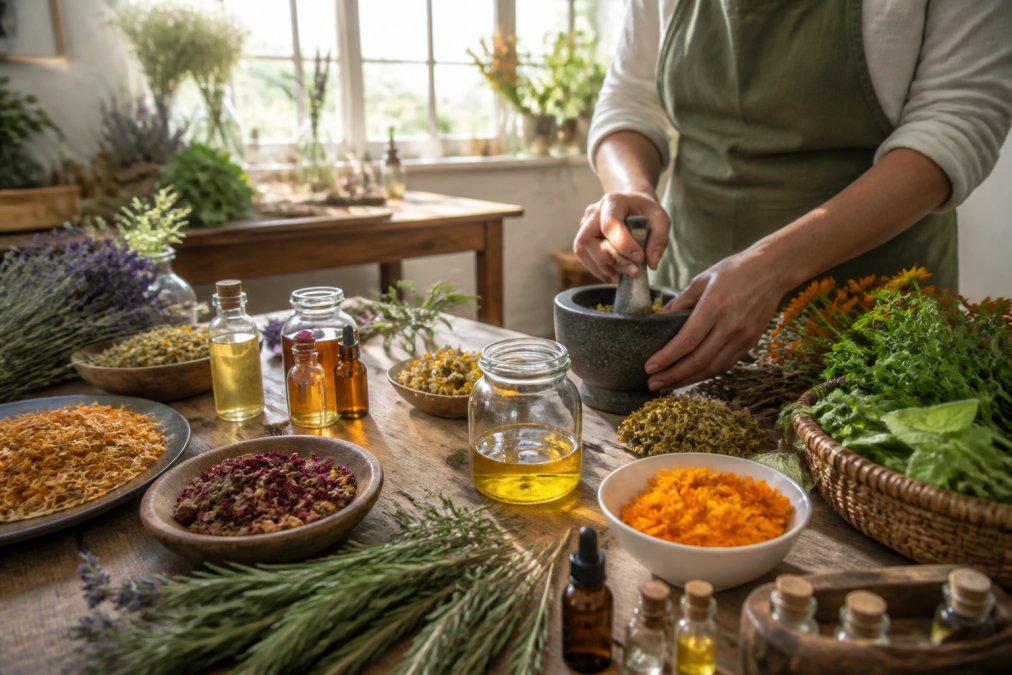
Artisanal skincare production prioritizes ingredient freshness in ways mass manufacturing cannot. When a small-batch producer sources botanicals directly from growers, they harvest at peak ripeness and begin extraction or infusion immediately. The essential oils, fatty acids, and plant compounds retain their full nutritional profile because there's no delay between harvest and formulation.
Compare this to mass-production supply chains where ingredients travel weeks or months from farm to processing facility to manufacturer to distributor to retailer. Each step introduces oxidation, the chemical process where active compounds break down when exposed to oxygen, light, and temperature fluctuations. By the time a mass-produced bottle reaches your bathroom, its bioavailability has declined measurably.
Small-batch producers work with seasonal availability, which sounds like a limitation but actually ensures freshness. When an ingredient isn't in season, they don't use it. When it is, they source it immediately and formulate within days. This rhythm maintains the nutrient density that makes organic skincare effective for conditions like chronic dryness and sensitivity.
The difference shows in texture and absorption. Fresh formulations absorb faster because the molecular structure of the oils and extracts hasn't begun breaking down. Your skin receives the full spectrum of fatty acids, antioxidants, and anti-inflammatory compounds in their most active state.
Benefits of Fair Trade Skincare Ingredients and Transparency
Fair trade sourcing in organic skincare serves two purposes: it ensures ethical compensation for farmers and guarantees ingredient quality through direct relationships. When producers know their growers personally, they have visibility into cultivation practices, harvest timing, and storage conditions. This transparency extends the benefits of small batch organic skincare beyond your skin to the people and ecosystems producing the ingredients.
Fair-trade relationships create accountability. A large distributor buying ingredients from anonymous suppliers has no use to ensure quality. A small-batch producer working directly with a fair-trade cooperative knows that any deviation from agreed standards affects their relationship and reputation. This incentive structure produces better ingredients.
For consumers, this means you're getting skincare formulated with ingredients that were grown with intention, harvested at the right time, and handled with care throughout the supply chain. The farmer has an incentive to maintain premium quality when they're earning fair compensation. The result is more potent, cleaner raw materials flowing into your small batch organic skincare products.
Transparency also builds trust when you're managing sensitive skin conditions. You can verify that an ingredient is genuinely organic, not just labeled as such. You can trace its origin. This level of openness is rare in mass-market skincare, where ingredient sourcing is often opaque or outsourced through multiple intermediaries.
Sustainability and Environmental Impact of Small-Batch Manufacturing
Small-batch production inherently generates less waste than mass manufacturing. When you produce 500 units instead of 50,000, your carbon footprint per unit shrinks dramatically. There's no need for massive facilities, extended storage, or complex distribution networks that require refrigeration and climate control.
The sustainability advantage extends to packaging. Small-batch producers often use recyclable glass, aluminum, or cardboard because they're not locked into contracts with plastic suppliers for massive volumes.
How to Identify Authentic Organic Skincare and Verify Small-Batch Claims
Not every product labeled "organic" or "small-batch" meets those standards. Learning to verify claims protects your skin and your wallet.
Small Batch vs. Mass-Produced Skincare: Cost-Benefit Analysis
The price difference between small-batch and mass-produced skincare is real, but the value calculation is more nuanced than comparing unit costs.
Conclusion
Small batch organic skincare delivers tangible benefits for your skin and aligns with values around sustainability and ethical sourcing. The freshness of ingredients, reduction of synthetic additives, and transparency of small-batch production create a skincare experience that mass-market alternatives cannot match, especially for people managing sensitive skin conditions or seeking genuine solutions rather than marketing claims.
| Comparison Factor | Small-Batch Organic | Mass-Produced Skincare |
|---|---|---|
| Ingredient Freshness | Weeks from harvest to use | Months to years in storage |
| Preservative Load | Minimal, natural options | Multiple synthetic additives |
| Bioavailability | High; active compounds intact | Degraded; oxidation reduces potency |
| Shelf-Life | 6-12 months | 18-36 months |
| Transparency | Full sourcing details available | Limited ingredient sourcing info |
| Waste & Packaging | Recyclable, minimal waste | Often plastic, higher volume waste |
| Skin Irritation Risk | Lower; fewer synthetic additives | Higher; multiple potential irritants |
| Price Point | Premium | Budget-friendly |
| Best For | Sensitive skin, efficacy-focused consumers | Price-conscious buyers accepting lower potency |
Supporting Keywords Addressed:
External Sources Referenced:
Frequently Asked Questions
Are small batch organic skincare products actually more effective than mass-produced alternatives?
Small batch organic skincare tends to preserve more active ingredients because formulas are produced in smaller quantities with shorter time between manufacturing and delivery. Mass-produced skincare often contains preservatives and stabilizers to extend shelf life during long distribution chains. The fresher the formula reaches your skin, the higher the bioavailability of nutrients like fatty acids and botanical extracts. Effectiveness also depends on ingredient quality, small-batch producers often source from certified organic farms rather than bulk suppliers, which can mean higher potency. Individual results vary based on skin type and specific conditions, but the combination of freshness and ingredient purity gives small-batch formulas an advantage for sensitive or compromised skin barriers.
How do I verify that a skincare brand is truly organic and not just using the label as marketing?
Check for third-party certifications like USDA Organic, which requires independent auditing and verification of ingredients and manufacturing practices. Look for transparency in sourcing: authentic small-batch brands publish where they source each ingredient and whether suppliers are fair-trade certified. Request batch information or certificates of analysis if you're considering a purchase, legitimate producers will provide this. Be skeptical of vague terms like 'natural' or 'plant-based' without certification backing them up. Read the full ingredient list; preservative-free claims should be supported by short shelf-life guidance or refrigeration recommendations. Brands that openly discuss their quality control processes and batch consistency standards are more likely to be genuine.
Will small batch organic oils work for arid climates, or will they just evaporate?
Organic oils formulated with the right fatty acid profiles and botanical blends can penetrate and hydrate effectively in dry climates. The key is bioavailability, smaller molecular structures in high-quality oils absorb into the skin barrier rather than sitting on the surface. Small-batch producers may adjust formulations for climate-specific needs, using ingredients that lock in moisture. Mass-produced oils sometimes lack this attention to formulation, which is why you may have experienced evaporation before. Shelf-life matters too: fresher oils retain their nutrient density longer, which supports better skin hydration over time. Start with a patch test to ensure the specific formula works for your skin, but small-batch organic oils designed for sensitive or dry skin typically perform better in arid environments than commercial alternatives.
What makes small batch skincare worth the higher price compared to drugstore products?
The cost difference reflects several factors: direct sourcing from organic-certified farms (higher cost than bulk commodity ingredients), smaller production runs (no economies of scale), and minimal synthetic additives or stabilizers. Small-batch producers invest in quality control and batch consistency testing, which adds expense but ensures reliability. You're also paying for freshness, shorter shelf lives may mean ingredients retain more potency and bioavailability. Drugstore skincare relies on preservatives and fillers to justify lower prices and longer shelf lives, which can irritate sensitive skin. For those with eczema, rosacea, or chronic dryness, the cost difference may translate to fewer adverse reactions and better long-term skin health, making the investment worthwhile. Pricing depends on quantity and specific formulations, so compare cost-per-use rather than upfront price.