
Table of Contents
- Understanding Dry Skin vs. Dehydrated Skin in Arid Environments
- How Low Humidity Damages Your Skin Barrier
- Essential Ingredients: Humectants vs. Occlusives for Arid Climates
- Step-by-Step Hydration Routine for Dry Climates
- Choosing the Best Moisturizer for Desert Climates
- Environmental Strategies Beyond Skincare
- Common Mistakes to Avoid in Arid Climates
- Frequently Asked Questions
Last Updated: September 20, 2026
Understanding Dry Skin vs. Dehydrated Skin in Arid Environments
Dry skin and dehydrated skin are not the same thing. Dry skin is a skin type where your skin naturally produces less oil. Dehydrated skin is a condition where your skin lacks water, regardless of oil production. In arid climates, you can have oily skin that's also dehydrated.
Treatment approaches differ: dry skin needs emollients and occlusives to add oil, while dehydrated skin needs humectants to draw water in and lock it there. Arid environments accelerate dehydration by pulling moisture from your skin faster than in humid climates, weakening your skin barrier and increasing sensitivity.
How Low Humidity Damages Your Skin Barrier
Your skin barrier is a protective layer that holds water in and keeps irritants out. Low humidity doesn't just dry your skin, it actively damages this wall by accelerating transepidermal water loss (TEWL). Water evaporates from your skin faster than your body can replace it, creating cracks that allow irritants to penetrate deeper.
This damage compounds over time. Environmental stressors in arid climates, wind stripping protective oils, sun exposure damaging cells, constant moisture loss, and temperature swings, all stress your barrier further. The fix starts with hydration to plump cells, lipids to seal gaps, and gentle care to avoid further damage.
Essential Ingredients: Humectants vs. Occlusives for Arid Climates
Hydrating your skin in arid climates requires two types of ingredients working together. Humectants draw water into your skin. Occlusives seal that water in.
Humectants: Drawing Moisture In
Humectants are water-loving ingredients that pull moisture from the air and deeper skin layers into your outer skin. Hyaluronic acid can hold up to 1000 times its weight in water, though it only works if there's moisture available to draw from. Glycerin is another powerful humectant that penetrates deeper and boosts barrier function over time.
Apply hydrating serums within 60 seconds of cleansing while your skin is still slightly wet. This timing is crucial in arid climates.
Occlusives: Sealing Moisture In
Occlusives are oils and waxes that prevent water from evaporating. Squalane mimics your skin's natural oils, absorbs quickly, and doesn't feel greasy. Ceramides are lipids that repair your barrier by filling gaps and reducing water loss.
Layer humectants on damp skin first, then seal immediately with occlusive oils. This combination prevents the moisture loss that happens in arid climates.
Step-by-Step Hydration Routine for Dry Climates
A proper hydration routine in arid climates has four essential steps.
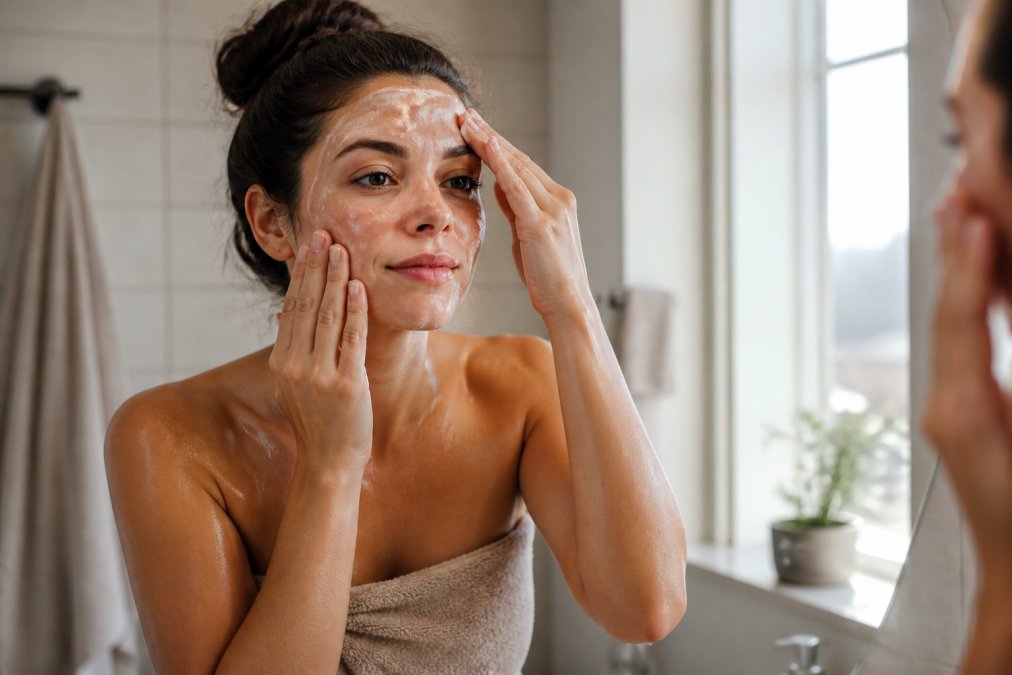
Step 1: Cleanse Gently Without Stripping
Use a gentle, sulfate-free cleanser that removes dirt without damaging your barrier. Massage for 30-60 seconds with lukewarm water, hot water increases water loss. Pat your skin dry gently and leave it slightly damp for the next step.
Step 2: Apply Hydrating Serums on Damp Skin
Apply 2-3 drops of a serum with humectants like hyaluronic acid or glycerin while your skin is still damp. Press gently into your skin without rubbing. Let it absorb for 30-60 seconds.
Step 3: Layer Your Moisturizer and Oils
Apply a lightweight moisturizer with ceramides, then a facial oil as your occlusive layer. Use 2-3 drops of oil and press gently across your face. glō Luxury Oils' 100% organic facial oils are formulated to absorb quickly without leaving greasy residue.
Step 4: Seal with an Occlusive Layer
If your skin still feels dry after 2-3 minutes, add one more occlusive layer. Apply sparingly, a little goes a long way. This entire routine takes 5-7 minutes and should be done twice daily. Results appear within 3-5 days.
Choosing the Best Moisturizer for Desert Climates
Not all arid climates demand the same moisturizer. Low-elevation desert climates (below 3,000 feet) feature intense heat and rapid moisture evaporation, while high-altitude climates (above 5,000 feet) have lower atmospheric pressure that pulls moisture from your skin more aggressively, plus 10-15% stronger UV radiation.
Desert Heat vs. High-Altitude Dryness
In desert heat: Your skin needs lightweight, fast-absorbing moisturizers with strong humectants (glycerin, hyaluronic acid) and breathable occlusives (squalane, lightweight oils). Heavy creams trap heat and feel uncomfortable.
At high altitude: Your skin needs richer occlusive layers because atmospheric pressure actively pulls moisture outward. Layer a hydrating serum + moisturizer + facial oil, even if you wouldn't in lower elevations. Antioxidants become more critical because UV damage accelerates barrier breakdown.
Ingredient Stability in Extreme Heat
Heat degrades active ingredients. Vitamin C serums oxidize rapidly above 77°F and lose efficacy. Store in the refrigerator and use within 3 months. Retinol and retinoids degrade in heat and sunlight, apply only at night and store in cool, dark places. Hyaluronic acid is stable but becomes less effective if not sealed immediately with an occlusive. Peptides and amino acids are generally heat-stable but work best when your barrier is intact.
What to Look For in an Arid-Climate Moisturizer
Your moisturizer should contain ceramides (ideally 1, 3, and 6-II) to repair barrier gaps, glycerin or another humectant at 3-5% concentration, absorb within 2-3 minutes, be fragrance-free, and avoid water as the first ingredient in extreme heat.
Avoid heavy silicones, alcohol denat, mineral oil, and fragrance, all irritate compromised barriers.
Layering Strategy for Maximum Hydration
Layer three lighter products instead of relying on one heavy moisturizer:
- Hydrating serum (humectant-based, applied to damp skin): 2-3 drops
- Lightweight moisturizer (ceramides + glycerin): pea-sized amount
- Facial oil (squalane, jojoba, or argan): 2-3 drops
This approach gives you humectants, barrier repair, and occlusion without greasiness. In high-altitude climates, commit to all three layers. In low-elevation desert heat, serum + lightweight moisturizer + one oil layer may suffice.
Environmental Strategies Beyond Skincare
Skincare products alone can't fight environmental damage in arid climates.
Managing Skin Shock When Traveling to Arid Climates
Pre-travel preparation (3-5 days before): Start using a humectant serum daily, introduce a richer moisturizer and facial oil, increase water intake to 10-12 glasses daily, and avoid exfoliation and active ingredients.
During travel: Use a travel-size humidifier in your hotel room, apply hydrating serum and occlusive oil immediately after cleansing, avoid air conditioning vents, mist your face with hydrating spray every 2-3 hours, and skip new skincare products.
Post-travel (first 2 weeks): Commit to the full hydration routine twice daily, use a humidifier every night at 40-60% humidity, avoid saunas and hot showers, and expect 7-10 days before your skin fully adjusts.
Using a Humidifier to Combat Indoor Dry Air
Indoor air in arid climates is even drier than outdoor air. A humidifier adds water back into the air and is one of the most effective environmental interventions.
Humidity targets: Optimal range is 40-60%. Below 30% humidity, your skin shows visible dryness and sensitivity. Above 65%, mold and dust mites thrive.
Humidifier best practices: Use a cool-mist humidifier, run it in your bedroom while you sleep, clean every 2-3 days with distilled water, position it 3-6 feet from your bed, and use it year-round. A humidifier dramatically improves how well your skincare routine works.
High-Altitude Specific Strategies
UV protection is critical: UV radiation increases approximately 10% for every 3,300 feet of elevation gain. Use SPF 50+ daily, reapply every 90 minutes outdoors, and wear a wide-brimmed hat and UV-blocking sunglasses.
Atmospheric pressure effects: Layer your moisturizer and occlusive oil more generously than at sea level. Use a humidifier set to 50-60% humidity (higher than the 40-50% target at lower elevations).
Altitude acclimation: Your skin takes 2-3 weeks to acclimate.
Hydration From Within: Water Intake and Nutrition
Water intake guidelines: In arid climates, drink 10-12 glasses daily. At high altitude, drink 12-15 glasses daily. Pay attention to thirst signals and urine color, pale yellow indicates adequate hydration.
Protecting Skin From Sun and Wind Damage
Sun protection: Wear SPF 30 minimum daily, SPF 50+ in high-altitude areas. Reapply every 2 hours outdoors. Wear a wide-brimmed hat and UV-blocking sunglasses. Seek shade during peak UV hours (10 a.m. to 4 p.m.).
Common Mistakes to Avoid in Arid Climates
Mistake 1: Using hot water. Use lukewarm water only.
Mistake 2: Over-exfoliating. Limit exfoliation to once weekly at most.
Frequently Asked Questions
What's the difference between dehydrated skin and dry skin in arid climates?
Dehydrated skin lacks water in the epidermis, a temporary condition caused by low humidity, wind, and transepidermal water loss, and feels tight and flaky. Dry skin is a skin type with insufficient natural oils and requires long-term care. In arid climates, you may experience both simultaneously. Dehydrated skin shows signs like rough texture and increased sensitivity, while dry skin appears dull with persistent tightness. Identifying which you have helps you choose between hydrating serums (for dehydration) and nourishing oils (for dryness).
What ingredients should I look for to hydrate dry skin in arid environments?
Seek humectants like hyaluronic acid and glycerin to draw moisture into the skin, combined with occlusives such as ceramides, squalane, and plant-based oils to lock it in. In extreme dryness, peptide serums support skin elasticity, while emollients smooth the lipid barrier. For arid climates specifically, avoid lightweight serums alone, pair them with a rich moisturizer or facial oil to prevent rapid evaporation. Organic, plant-based formulations with minimal synthetic ingredients reduce the risk of irritation in sensitive, dry skin.
How does low humidity affect my skin barrier, and why does it matter?
Low humidity accelerates transepidermal water loss (TEWL), the evaporation of water from your skin's surface. This weakens your skin barrier, the protective layer of lipids and dead skin cells, making it more permeable and vulnerable to irritants, bacteria, and environmental stressors. A compromised barrier leads to increased sensitivity, flaking, and inflammation. By using humectants and occlusives, you restore the barrier's ability to retain moisture and function as a protective shield. This is especially critical in desert climates where indoor heating and outdoor dryness compound the effect.
Should I use a humidifier if I live in a dry climate?
Yes, a humidifier is one of the most effective environmental tools for combating dry skin in arid climates. Adding moisture to indoor air reduces TEWL while you sleep and spend time indoors, supporting your skin's natural hydration. Aim for 40-60% humidity in your bedroom. Pair this with a consistent skincare routine using hydrating serums and occlusive oils for maximum benefit. A humidifier is especially helpful during winter or in high-altitude areas where indoor heating further depletes moisture from both air and skin.