
Table of Contents
- What Fair Trade Certification Means for Your Beauty Products
- 1. Fair Wages and Income Stability for Farmers
- 2. No Forced Labor or Child Labor in the Supply Chain
- 3. Safer Working Conditions and Health Protections
- 4. Environmental Sustainability and Regenerative Farming
- 5. Stronger Local Communities and Infrastructure
- 6. Better Ingredient Quality and Traceability
- 7. Ethical Sourcing in Skincare: What It Means for Your Skin
- Frequently Asked Questions
Last Updated: September 21, 2026
What Fair Trade Certification Means for Your Beauty Products
Fair trade beauty refers to skincare and cosmetics made with ingredients sourced under certification systems that guarantee fair pay, safe conditions, and environmental care throughout the supply chain. For shoppers dealing with dry, reactive skin, that matters more than you might expect. This guide from glō Luxury Oils walks through the seven benefits of fair trade beauty products, from cleaner ingredients to stronger farming communities.
The label on the bottle rarely tells the whole story. A serum can say "natural" and still be made from crops harvested by underpaid workers on land stripped of nutrients. Certification changes that equation. It sets enforceable rules for wages, working hours, and farming methods, then sends independent auditors to check.
Below, we break down each benefit and show you how to spot real certification versus marketing noise.
The Difference Between Fair Trade and Organic Labels
These two labels answer different questions. Organic certification covers how a crop is grown: no synthetic pesticides, no genetically modified seed, specific soil management rules. Fair trade certification covers how the people who grew it are treated: wages, safety, child labor bans, and community investment.
A product can carry one, both, or neither.
- Organic = farming method
- Fair trade = human and community standards
- Both together = the strongest signal
What most shoppers miss is that a bottle can be certified organic while the farm workers behind it earn poverty wages. The two systems do not overlap by default. Look for both marks when you can.
1. Fair Wages and Income Stability for Farmers
Fair trade sets a floor price for crops, so farmers earn a stable amount even when market prices drop. That floor protects smallholder farmers from the boom-and-bust cycles that push many out of farming entirely.
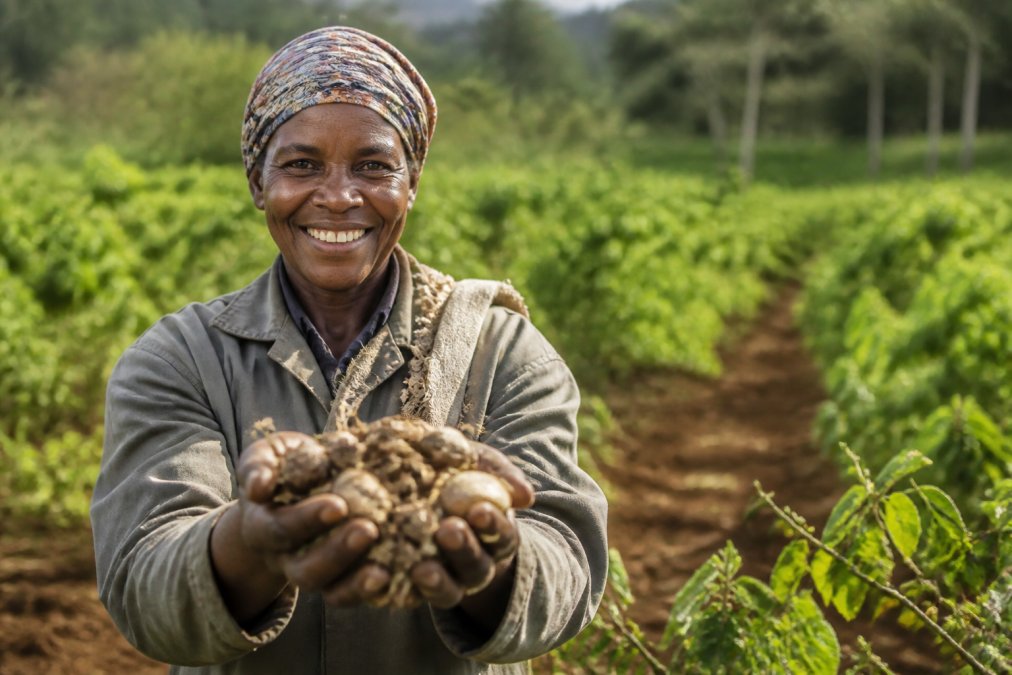
A common mistake is assuming "fair wage" just means a bit more money. It also means predictable money. When a farmer knows what a harvest will earn, they can plan, invest, and stop selling land to survive a bad season. That stability ripples through whole villages.
2. No Forced Labor or Child Labor in the Supply Chain
Certification bans forced labor and child labor outright, and auditors verify it on site. This is one of the clearest benefits of fair trade beauty products: a documented chain of custody from field to formula.
Supply chains for beauty ingredients are long and often opaque. Shea, argan, and cocoa can pass through several buyers before reaching a manufacturer. Certification standards require traceability at each step. Without that, brands cannot honestly claim their ingredients were ethically sourced.
3. Safer Working Conditions and Health Protections
Fair trade standards require protective equipment, safe handling of materials, and limits on working hours. Farm work involves real hazards, and those protections reduce injury and illness.
Many conventional farms leave workers to handle pesticides and heavy loads without gear. Certified operations must supply it and train workers to use it. For anyone who cares about human rights behind their skincare, this is not a small detail.
4. Environmental Sustainability and Regenerative Farming
Certified fair trade farms must follow environmental rules: limited pesticide use, water conservation, waste management, and protection of biodiversity. Many go further into regenerative practices that rebuild soil health.
Soil health matters to your skin, too. Plants grown in living, nutrient-rich soil tend to produce oils with better character and stability. Sustainable agriculture and ethical sourcing in skincare are not separate goals. They reinforce each other.
5. Stronger Local Communities and Infrastructure
A portion of fair trade revenue, called the social premium, goes back to the farming community. Villages decide together how to spend it, often on schools, clean water, or clinics.
This is economic empowerment in practice. The premium is not charity; it is money the community directs itself. Over time, that builds infrastructure that outlasts any single harvest and reduces poverty in the region.
6. Better Ingredient Quality and Traceability
Traceability is the paper trail that lets you follow a single ingredient from the farm plot to the finished bottle. Under fair trade certification, that trail is audited, not self-reported. Most competitors stop at the phrase "supply chain transparency" without explaining what it actually changes in the bottle. Here is the ingredient-level version.
Shea butter. Shea nuts are traditionally harvested and hand-processed by women's cooperatives in West Africa. Under fair trade, those cooperatives negotiate collectively, receive a guaranteed minimum price, and control the social premium. The practical quality effect: nuts are sorted and cold-pressed in smaller batches rather than bulked and shipped through multiple intermediaries.
Fair trade certification standards for ingredients
This is where glō Luxury Oils fits. We source directly from small, fair-trade, and organic-certified farms, then produce in small batches. Every oil is 100% natural and organic, and our packaging is recyclable with compostable shipping materials.
7. Ethical Sourcing in Skincare: What It Means for Your Skin
Ethical sourcing in skincare means the ingredients in your bottle were grown, harvested, and traded under verified standards, not just described that way on a label. The payoff for your skin is concrete: cleaner raw materials, fewer contaminants, and more consistent performance batch to batch.
Greenwashing vs. Fair Trade: How to Tell Them Apart
This is the distinction most shoppers never get explained. "Natural," "clean," "pure," and "ethical" have no fixed legal definition for cosmetics in the United States. A brand can print them on any bottle without proving anything. Fair trade and organic are different: they are certified terms backed by independent auditors who inspect the supply chain.
- Look for a recognized fair trade mark, not just the word "ethical"
- Check whether organic certification is listed with a certifier name
- See if the brand names its farms or regions of origin
- Confirm the label lists ingredients, not vague "fragrance" blends
- Search the brand's site for a sourcing or impact page
- Be wary of "natural" claims with no certification behind them
| Claim | What It Means | Verified By |
|---|---|---|
| Fair trade | Wages, safety, no child labor | Independent auditors |
| Organic | Farming method, no synthetic pesticides | Certified bodies |
| Natural | No fixed definition | No one |
| Clean | No fixed definition | No one |
The Cost Question: Is the Price Premium Worth It?
Certified fair trade beauty usually costs more. That is not a marketing trick; it reflects real costs. A guaranteed minimum price for farmers, protective equipment, third-party audits, and direct cooperative relationships all add expense that conventional supply chains skip.
How Your Purchase Reaches a Community
When you buy a certified product, a defined portion of the revenue, the social premium, is paid back to the farming cooperative. The cooperative votes on how to spend it, often on schools, clean water systems, or clinics. That means your purchase is not just a transaction with a brand; it is a small contribution to a specific community project you can sometimes trace by name.
Frequently Asked Questions
What are the primary benefits of using fair trade beauty products?
Fair trade beauty products support living wages, safe working conditions, and environmental sustainability. They also promote supply chain transparency, so you know where ingredients come from. For your skin, fair trade often means fresher, higher-quality natural ingredients because they are sourced directly from smallholder farmers who use sustainable agriculture practices. This can lead to more effective skincare, especially for sensitive or dry skin.
How can consumers verify if a beauty product is truly fair trade?
Look for third-party certifications like Fair Trade Certified, Fair for Life, or Fairtrade International on the label. These logos mean the product meets specific social, economic, and environmental standards. You can also check the brand's website for details on their supply chain and auditing practices. If a brand claims fair trade but provides no certification or transparency, treat it as a red flag. Authentic fair trade brands are usually eager to share their sourcing stories.
What is the difference between organic and fair trade beauty products?
Organic certification focuses on how ingredients are grown, prohibiting synthetic pesticides and fertilizers. Fair trade certification focuses on the social and economic treatment of farmers and workers, ensuring fair compensation, safe conditions, and community development. A product can be organic but not fair trade, or fair trade but not organic. The best options, like those from glō Luxury Oils, carry both certifications, meaning they support both environmental and human well-being.
Why is fair trade sourcing important for small-batch beauty brands?
Small-batch brands often rely on direct relationships with growers. Fair trade sourcing ensures these relationships are equitable, providing farmers with stable incomes and resources to improve their operations. This leads to better ingredient quality and consistency, which is crucial for small-batch production. It also aligns with the values of conscious consumers who want products that are ethical and effective. For brands like glō Luxury Oils, fair trade is a cornerstone of their holistic approach.
Choosing skincare that matches your values and your skin takes more than reading a label. At glō Luxury Oils, we make that choice easier with 100% organic facial and body oils, direct sourcing from fair-trade and organic-certified farms, and small-batch production that keeps every formula fresh. Our recyclable packaging and compostable shipping materials mean your routine is as kind to the planet as it is to your skin. Add to cart and experience beauty that is as ethical as it is effective.