
Last Updated: November 8, 2026
Quick Summary
Artisanal skincare has a shorter shelf life because it often uses fewer synthetic stabilizers and fresher plant-based ingredients that react to air, light, and heat. Small batches also mean the freshness clock starts later, so your countdown begins the day it ships. Water-based products spoil fastest, while oil-based products mainly face oxidation.
- Water-based mists and hydrosols typically last 6 to 12 months unopened and 3 to 6 months after opening.
- Facial and body oils typically last 12 to 24 months unopened and 6 to 12 months after opening.
- Store products cool, dark, and dry, away from shower steam, direct sun, and bathroom windowsills.
- A preservative must be proven effective in that specific formula, not just labeled natural.
- Write the open date on the label and follow whichever comes first, expiration date or open-jar symbol.
Table of Contents
- Why Artisanal Skincare Has a Shorter Shelf Life
- Handmade Skincare Shelf Life: What to Expect by Product Type
- Shelf Life of Natural Skincare Ingredients
- Preservatives, Packaging, and Product Longevity
- How to Store Natural Skincare Products
- Signs Skincare Has Gone Bad
- Reading Expiration Dates and Period-After-Opening Symbols
- Building a Small-Batch Ritual That Works With Your Shelf Life
- Frequently Asked Questions
Why Artisanal Skincare Has a Shorter Shelf Life
Artisanal skincare can have a shorter shelf life because it often uses fewer synthetic stabilizers and fresher plant-based ingredients. At glō Luxury Oils, we see that freshness as a feature, not a flaw. Below, we explain exactly why artisanal skincare ages faster and how to work with it.
The trade-off is real. A product built to sit on a warehouse shelf for years needs heavy preservation and fillers. A small batch made with fresh botanical oils does not. You get richer plant-based ingredients and a shorter window to enjoy them.
Here is the good news: once you understand why freshness fades, you can plan around it. That is what this guide covers.
Fresh Ingredients, Fewer Stabilizers
Fresh plant oils carry vitamins, antioxidants, and fatty acids that make skin feel soft and comfortable. Those same living compounds react to air, light, and heat. Over time they oxidize, and the oil turns.
Some small makers choose to skip synthetic stabilizers in favor of a cleaner formula. That choice means the product depends on the ingredients themselves, plus good packaging, to hold up. A common mistake is assuming "natural" means "shelf-stable." It does not.
Small Batches Mean Less Time on a Shelf
A small batch is often made shortly before it reaches you. That is a plus for freshness. It also means the clock started later, so your countdown begins the day it ships, not the day it was manufactured.
Small makers typically produce in smaller runs than large brands, which keeps the runway shorter.
Handmade Skincare Shelf Life: What to Expect by Product Type
Handmade skincare shelf life depends mostly on one thing: whether water is in the formula. Water-based products spoil faster than oil-based ones. Always check the label on your specific product, because formulation, packaging, and testing change these windows.
| Product Type | Typical Unopened Range | Typical After-Opening Range | Why |
|---|---|---|---|
| Water-based mists and hydrosols | 6 to 12 months | 3 to 6 months | Water invites microbial growth; preservative system and clean handling are essential |
| Lotions and creams | 6 to 12 months | 3 to 6 months | Water plus emulsifiers create a friendly environment for bacteria, mold, and yeast |
| Facial and body oils | 12 to 24 months | 6 to 12 months | No water, so microbial risk is low; the main enemy is oxidation |
| Salves and balms | 12 to 24 months | 6 to 12 months | Wax and butter base with low water activity; still vulnerable to heat and light |
| Lip balms | 12 to 24 months | 6 to 12 months | Anhydrous, protective base; watch for rancid oils and texture changes |
Typical Unopened Range
These ranges rest on a few assumptions worth naming. First, the product is made in a clean environment with good manufacturing practices. Second, water-containing products use a preservative system that has been shown to work in that specific formula, not just a preservative that sounds natural. Third, packaging limits air and finger contact. Fourth, the product is stored cool and dark. Change any of those and the window shifts.
A note on testing: ingredient-based estimates alone cannot establish that a product is safe. Makers who want to stand behind a date often use stability testing and challenge testing to see how a formula holds up over time.
Water-Based Products vs. Oil-Based Products
Water-based products generally need more careful handling. Where there is water, there is a chance for bacteria, mold, and yeast to grow. That is why a hydrosol or a cream needs a working preservative system and clean handling. The after-opening window is where most water-based products fail, because every dip of a finger or splash of tap water adds contamination.
Oil-based products behave differently. Without water, microbial growth is far less likely. The main risk is oxidation, which shows up as a rancid smell or a change in texture.
Our Moroccan Hydrosol is a water-based mist, so it belongs in the shorter-window group and deserves extra care with clean hands and a tight lid. Our Moroccan Body Oil is oil-based, and oxidation is the main thing to watch. Knowing which group a product falls into tells you how to treat it.


Watch out: a product that looks fine can still carry microbial risk, so do not use smell or appearance alone to decide that a water-based product is safe past its after-opening window.
Shelf Life of Natural Skincare Ingredients
The shelf life of natural skincare ingredients varies widely, and it sets the ceiling for the finished product. A formula can only stay fresh as long as its shortest-lived ingredient.
Carrier oils are the backbone of most small-batch skincare. Some, like certain nut and seed oils, go rancid faster than heavier, more stable oils. Antioxidant-rich oils tend to hold up better.
Essential oils and botanical extracts bring scent and plant actives. They also fade over time, so a product's smell can shift before anything is actually wrong.
A practical rule: store your products away from heat and light, and buy sizes you will finish. Freshness favors the person who uses what they buy.
Preservatives, Packaging, and Product Longevity
Preservatives and packaging do more for product longevity than almost anything else. A good preservative system keeps water-based products safe. The right container keeps air and fingers out.
A preservative system is judged by efficacy, meaning it can hold back bacteria, mold, and yeast in that specific formula at the intended use level. Ingredient-based estimates alone cannot establish that a product is safe; they are a starting point, not proof.
Packaging matters just as much, because it decides how much the formula is exposed to air, light, and fingers:
- Airless pumps limit contact with air and fingers, which is a real advantage for water-based products.
- Jars are lovely but let you dip in, which adds contamination risk; a small spatula and clean hands help.
- Amber glass shields oils from light, slowing oxidation.
- Small openings reduce exposure and make it harder to introduce water or debris.
- Dropper bottles keep fingers out of the product but still let air in with each use.
A beautiful jar can shorten a product's usable life if it is not handled carefully. Wash your hands first, use a small spatula, and keep the lid on between uses. For water-based products, never add tap water to stretch a formula, because that introduces new contamination and dilutes the preservative system.
If a water-based product changes smell, color, or texture before its after-opening window ends, treat that as a signal to stop using it rather than a reason to keep going.
How to Store Natural Skincare Products
To store natural skincare products well, keep them cool, dark, and dry, and keep water out of the bottle. Heat, light, and humidity are the three things that speed up spoilage.
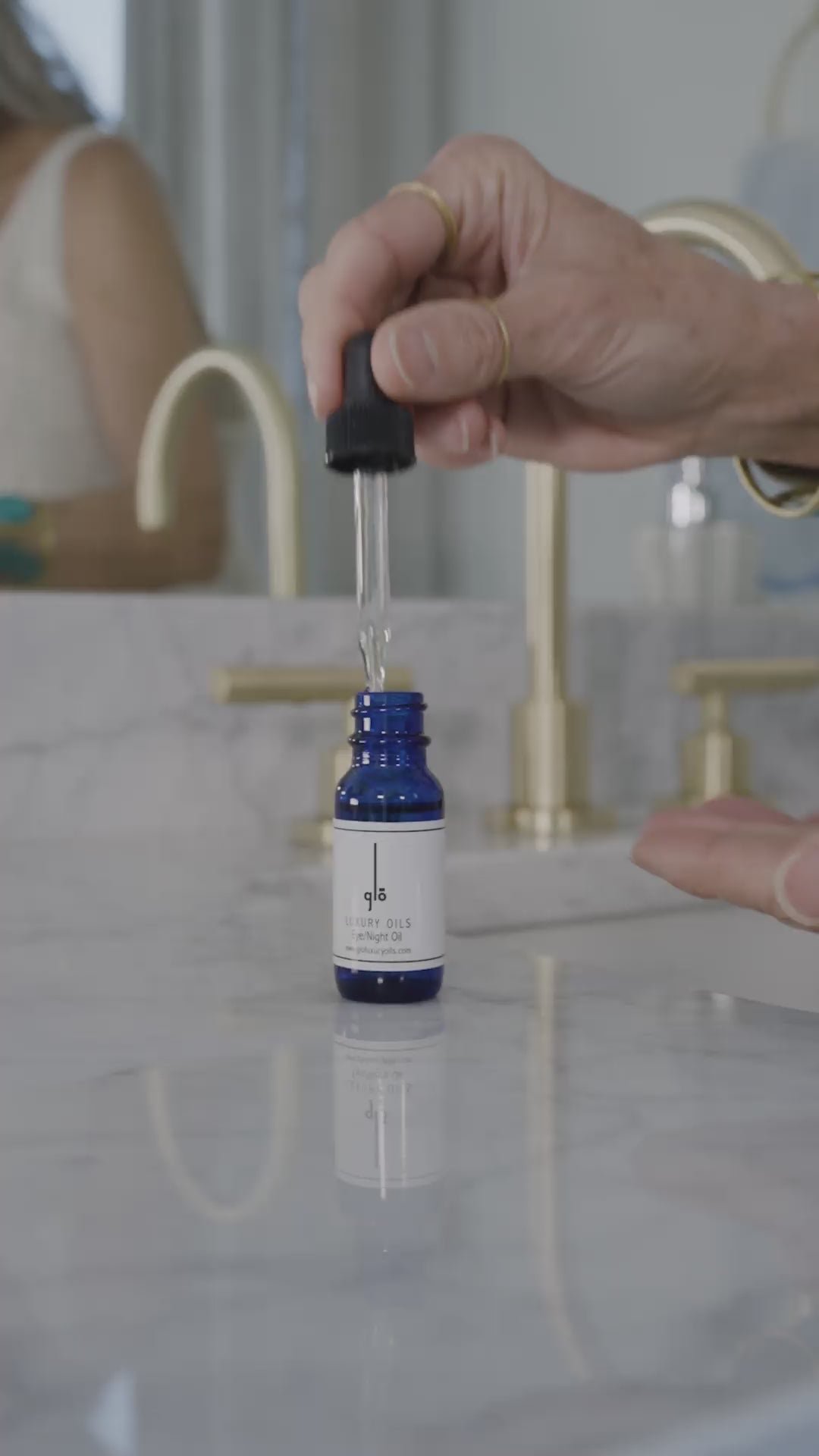
A few habits that help:
- Store products away from the shower's steam and heat.
- Keep bottles out of direct sun, even briefly.
- Close lids tightly after each use.
- Skip the bathroom windowsill.
- In a dry climate, still avoid hot spots near vents or heaters.
Think of storage as part of your ritual. A cool, dark drawer is a small act of care for the product and for you.
Signs Skincare Has Gone Bad
Signs skincare has gone bad usually show up as a change in smell, color, or texture. If a product looks, smells, or feels different from the day you opened it, treat that as a signal.
Watch for:
- A rancid or sour smell
- A color that has darkened or shifted
- Separation that will not blend back
- A gritty or grainy texture
- Mold or fuzz, which means stop immediately
What should you do with a product that changes? If it smells off or shows mold, let it go. For a slight scent shift in an oil, trust your nose. Your skin deserves a fresh product, and there is no shame in replacing one.
Reading Expiration Dates and Period-After-Opening Symbols
Expiration dates and period-after-opening symbols tell you two different things. The expiration date is about the unopened product. The period-after-opening symbol, a small open-jar icon with a number and "M," tells you how many months it stays good once opened.
Here is how to read them:
- Expiration date: the last date the maker stands behind the unopened product.
- Open-jar symbol: months of usable life after you first open it.
- Batch dates: small makers often print a made-on date instead.
If a product has both, follow whichever comes first. Write the open date on the label with a marker. It is a tiny habit that saves a lot of guesswork.
Building a Small-Batch Ritual That Works With Your Shelf Life
A small-batch ritual works best when you buy fresh, buy what you will use, and store it with care. Freshness rewards intention.
Start with the products you reach for daily, like a mist or a body oil, and buy sizes you can finish. Add a gentle note to your routine: a few drops warmed in your palms, a slow breath, a moment that is yours. Nourishment, not fixing.
If you are unsure where to begin, a personalized skincare consultation can help you match fresh products to your routine. When you are ready to build your ritual, you can shop the current small-batch release of organic facial oils, hydrosols, and body oils. For the bigger picture on why small batches are worth the shorter window, read our guide to the benefits of small-batch organic skincare.

Freshness asks something of you: a little attention, a cool drawer, and the willingness to finish what you open. That is the heart of a small-batch ritual, and it is where glō Luxury Oils comes in. We source ingredients directly from growers, blend in small batches, and package in recyclable materials so your skincare stays as close to nature as possible.
Frequently Asked Questions
Why does artisanal skincare have a shorter shelf life than mass-market products?
Artisanal skincare often skips the heavy stabilizers, fillers, and synthetic preservative systems that keep mass-market formulas uniform for years. Small-batch products lean on fresh plant-based ingredients, carrier oils, and essential oils that oxidize and lose potency faster. When you buy a handmade skincare product, you're buying freshness and a shorter window to enjoy it.
How long does handmade skincare last?
It depends on the formula. Anhydrous products like facial oils, body oils, salves, and balms generally have a longer window than water-based products such as hydrosols and toners, which have a shorter window once opened. Always check the label for an expiration date or period-after-opening symbol, and store products away from heat and light to get the most from each bottle.
How can you tell if natural skincare has gone bad?
Watch for changes in texture, color, and odor. Oils that smell sharp or rancid, creams that separate or turn grainy, and any product with visible mold or a cloudy film should be discarded. A change in how a product feels on your skin, like sudden irritation or a greasy residue that wasn't there before, is another sign. Trust your senses, and when in doubt, let it go.
How should you store artisanal skincare to make it last longer?
Keep bottles and jars in a cool, dark place away from direct sunlight and heat, like a closed cabinet rather than a steamy bathroom shelf. Tighten caps after each use, avoid dipping fingers into jars, and use a clean spatula when possible. For oils and balms, a bedroom drawer or pantry shelf works well. Storing products properly protects the botanical ingredients and helps you get every last drop.
